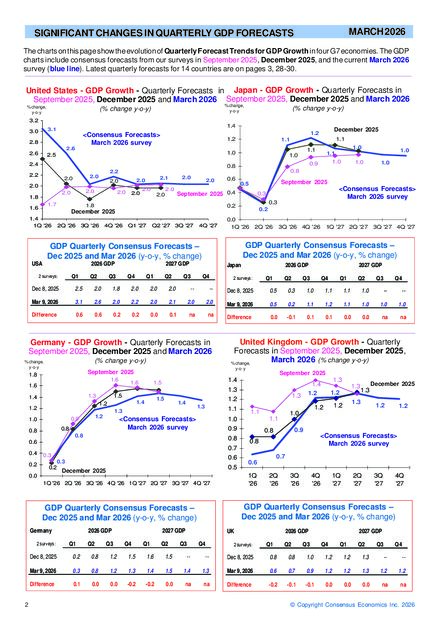
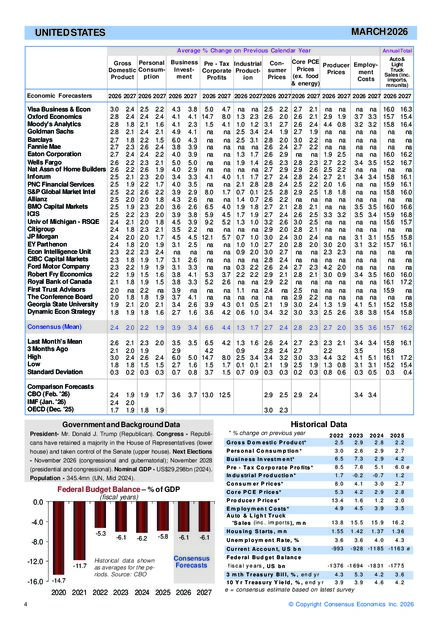
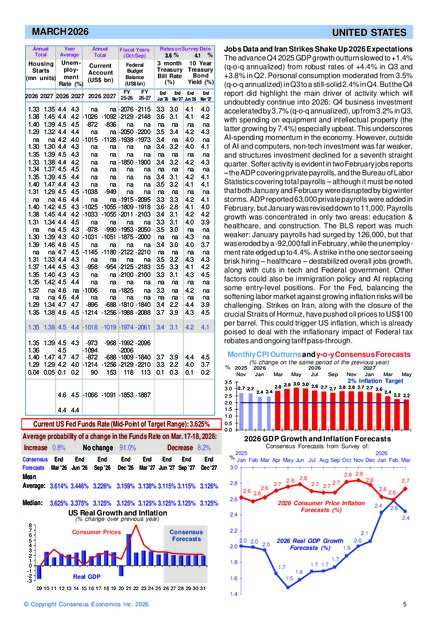
Consensus Economics publishes regional macroeconomic forecasts, foreign exchange forecasts and specialist energy, metals and agriculture price forecasts, together with selected special surveys and longer-horizon datasets. Browse forecasts by country.
Do the publications show the forecasts behind the consensus?
Yes. The consensus is built from individual professional forecasts, and the relevant publication tables provide contributor-level detail alongside the calculated consensus so users can see the range of views behind the headline number. How the consensus works.
How often are the forecasts updated?
Our core regional, foreign-exchange and commodity surveys follow a monthly publication cycle. Some specialist and long-horizon surveys are conducted quarterly, twice yearly or annually according to the subject. View publication schedules.
Which delivery format should I choose?
Choose the format that matches how you use forecasts:
Publications: Read the survey commentary and forecast tables in a report. Browse publications.
Can I review samples and use the data outside the PDF publications?
Yes. You can review full sample forecasts before ordering. Structured forecast data is also available through Excel, API and historical databank services for analysis, automation and research workflows. Compare data access options.
Your privacy
Choose how we use cookies
We use necessary cookies to keep the site working. With your permission, analytics cookies help us understand how the site is used so we can improve it.