
A trusted benchmark for professionaleconomic expectations.
Since 1989, Consensus Economics has brought together independent forecastsfrom professional economists around the world to provide a consistent, comparable view of the economic outlook.
Five advantages built over more than three decades.
A useful consensus depends on more than calculating an average. It requires deliberately constructed professional panels, a long and consistent history, disciplined survey processes and reliable publication through changing market conditions.
Experience that is difficult to replicate.
We have been collecting professional macroeconomic forecasts since 1989, creating one of the longest-running global records of consensus expectations.
A large historical forecast database.
More than 21 million forecasts provide a deep time series record for tracking expectations, revisions, turning points and forecast performance.
Broad professional participation.
Our network includes more than 1,000 economists from financial institutions, research organisations and specialist local consultancies around the world.
Consistency through every market cycle.
Consensus Economics has not missed a scheduled survey date since the first survey in October 1989, giving users a dependable sequence of observations through time.
Carefully checked, independently useful.
Our economists carefully review submissions for completeness and consistency before publication, deliberately maintaining the integrity of the data clients use as a benchmark.
A benchmark supported by decades of forecasting research.
Consensus forecasts are widely studied because combining independent professional estimates can reduce reliance on any single model or forecaster. Academic and central bank research has examined the accuracy and usefulness of consensus forecasting across markets and economic cycles.
Explore the research bibliographyCompare against a market benchmark rather than one house view.
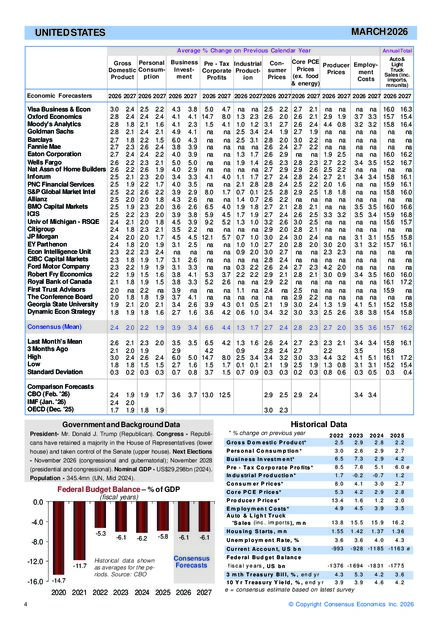
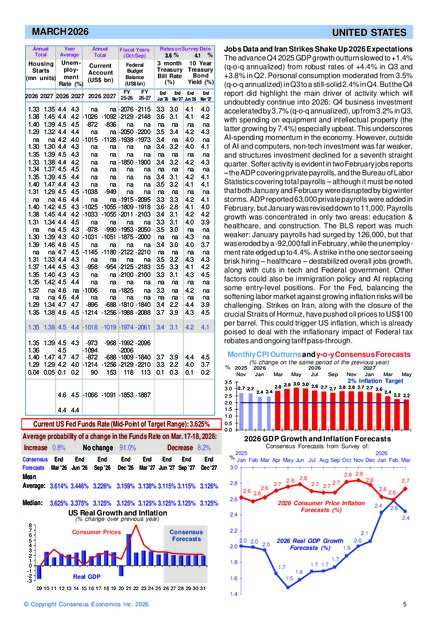
Track forecast revisions and changes in professional sentiment through time.
See the distribution around the mean through individual, high and low forecasts.
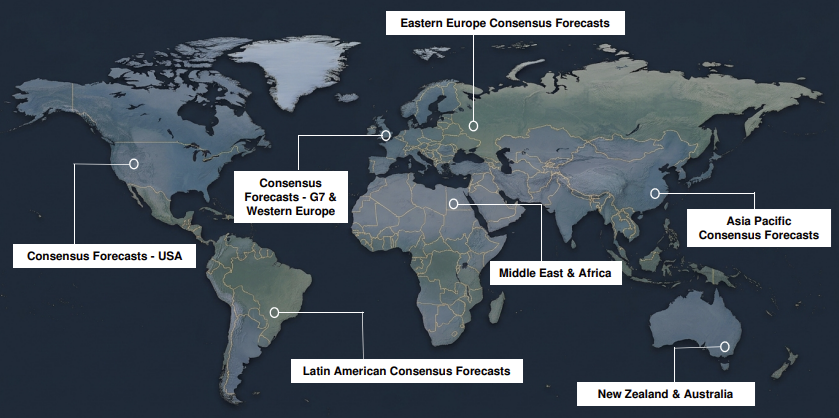
Comparable forecasts across developed and emerging markets.
Our forecast publications span more than 100 economies as well as currencies and commodities, allowing users to work with a consistent survey framework across markets rather than assembling unrelated sources.
Independent data for investment, policy and planning.
Consensus Economics data is used as an external reference point by organisations that need to compare internal assumptions with professional expectations in the wider market.
Discuss your data requirementsA disciplined process behind every survey.
-
1
Collect
Survey carefully selected professional economists and specialist forecasters using consistent definitions and deadlines.
-
2
Review
Check submissions for completeness, consistency and apparent data issues before publication.
-
3
Calculate
Produce consensus measures while retaining the individual estimates behind the benchmark.
-
4
Deliver
Publish on a dependable schedule through publications, Excel datasets and other data access options.
Questions about our methodology and data
What makes Consensus Economics different?
Our work is built around a specialist survey process developed over decades. We deliberately assemble and maintain panels of professional forecasters, collect forecasts on a consistent timetable and basis, review submissions carefully, and calculate the consensus from the underlying individual forecasts. How consensus forecasts are produced.
The value lies in that discipline: maintaining comparable definitions, dependable survey databases and continuity through time so the consensus is a robust benchmark rather than a black-box number.
Can I see the individual forecasts behind the consensus?
Yes. Rather than presenting only an average, our core datasets allow users to examine the forecasts that sit behind the consensus and analyse the distribution of professional expectations. Explore the forecast publications.
How deep is the historical record?
Our survey history extends back to 1989, and the databank contains more than 21 million individual forecasts. Carefully preserved survey databases support proper point-in-time analysis rather than hindsight reconstruction. Explore historical Excel data.
Put consensus forecasts to work.
Review the forecasts for yourself, then order the service that fits your research process.