
This article on the Japanese Yen and the recent US-Japan intervention was originally published in Foreign Exchange Consensus Forecasts: August 2026
Joint US-Japanese Yen Intervention
Consensus Economics, London
After the yen hit a new 40-year low near 164/US$ in late July, US and Japan conducted their first joint intervention since 1998 to lift the currency. To finance the move without putting upward pressure on US Treasury yields, the Japan reportedly acquired US$88bn through the Fed’s FIMA repo facility. In addition, the US Treasury sold euros to buy yen in a direct (but unusual) show of support. Whilst these measures were small in scale relative to the size of the US$1.4tn USD/JPY market, they prompted investors to unwind yen short positions and discouraged speculation. However, panellists warn that intervention can only provide temporary relief, without addressing the underlying causes. Furthermore, the US sale of euros, rather than dollars, marked a departure from convention, raising concerns about the direction of US FX intervention policy.

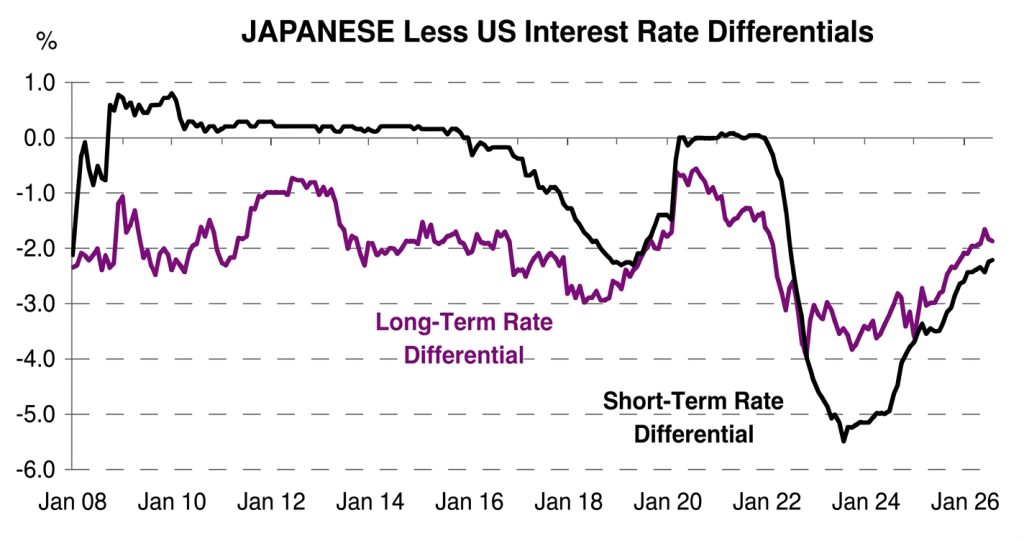
The BoJ’s decision to hold its policy rate unchanged at 1.0% on July 31 was expected. Negative real interest rates continue to yen funded carry trades and capital outflows, but the BoJ is hesitant to raise rates prematurely amid weak household consumption expenditures, which fell -1.5% (y-o-y) in June. Rates were last raised on June 16 and the consensus has assigned a 35.9% probability that the BoJ will hikes its policy rate by another 25bps at its next meeting on September 18. The yen is under pressure from higher energy prices, given Japan’s heavily reliance on imported supply. An extremely weak currency and higher global US$ oil and energy prices has raised import costs, negatively impacting the terms of trade and pushing inflation to 1.7% (y-o-y) in June, from 1.5% in May. Meanwhile, uncertainty over the funding of recent parliament approved food tax cuts costing US$31.7bn per year has added to fiscal concerns. The government has promised to not rely on deficit-financing bonds, which would add to the debt burden of over 200% of GDP, and instead cover additional spending through a comprehensive review of both expenditures and revenues.
