
This article on the British Pound and consensus expectations ahead of the September 17 Bank of England monetary policy decision, to hold the base rate unchanged at 3.75% following a 6-3 vote, was originally published in Foreign Exchange Consensus Forecasts: September 2026
British Pound Returns to £1.35/US$ – Monetary Policy Expectation Divergence
Consensus Economics, London
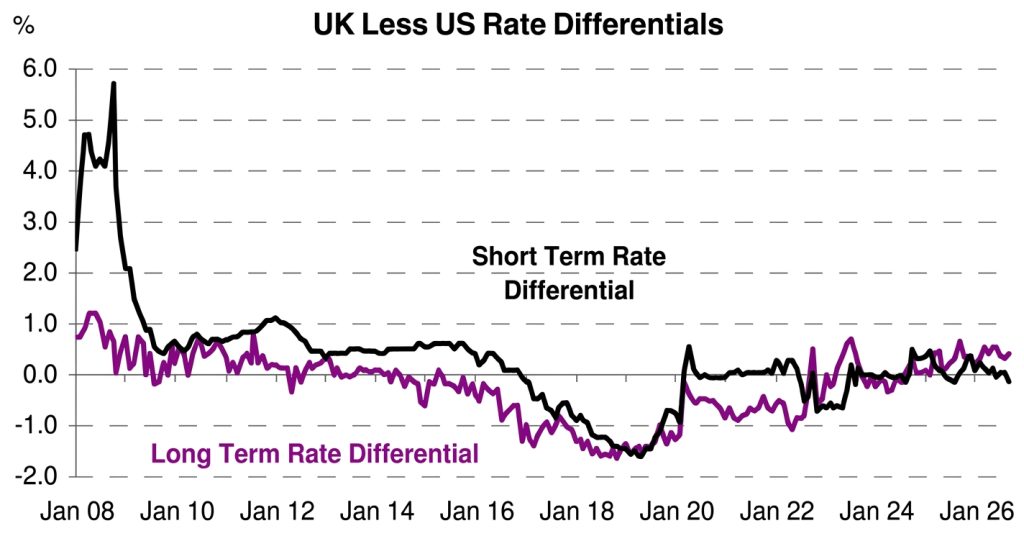
After rallying from late-July to mid-August, the pound has consolidated at around US$1.35/UK£ (daily chart, next page). Support has largely been driven by the recent renewed rise in global energy prices, which pushed up both inflation expectations and UK bond yields. Money markets are currently pricing in several rate hikes by September 2027, as increased import costs could require a tighter monetary policy response from the Bank of England. However, there is a notable divergence between market pricing and consensus expectations. The consensus does not currently expect a rate hike at the next central bank meeting on September 17 and anticipates 9bps of easing by Q3 2027. If the BoE adopts a less hawkish tone than markets currently expect, support for the currency could unwind.

Although UK inflation rose to 2.9% (y-o-y) in July, the price increase was in line with expectations and largely reflected the 13% hike in Ofgem’s energy price cap. There has also so far been limited indication of second round effects, reducing the need for immediate action. The growth outlook is also mixed. GDP expanded 0.4% (m-o-m) in July and 0.4% (q-o-q) in Q2, suggesting that activity remained buoyant. However, much of this growth was disproportionately driven by computer programming and related sectors, which have benefited from AI productivity gains. More broadly, the economy is showing signs of struggle, with the job market under pressure and the construction sector remaining particularly fragile. Meanwhile, higher bond yields have raised financing costs for the UK government ahead of the October 2027 budget. This adds to fiscal pressures and increases the risk of more borrowing or tax hikes. Either development could have a negative impact on the UK pound, if concerns over the public finances begin to outweigh fixed income support from higher rates.
